
—
Introduction – Why Logistics Is the Heartbeat of Every Business
Imagine trying to run a marathon with a tangled shoelace. That’s what it feels like for companies that ignore logistics. From the moment raw material leaves a supplier’s dock to the instant a customer clicks “Delivered,” logistics orchestrates every step. In today’s hyper‑connected market, a smooth logistics operation isn’t just a cost center—it’s a competitive advantage that can boost margins, improve customer loyalty, and future‑proof your business against disruptions.
If you’ve ever wondered how to turn the chaos of shipping, warehousing, and inventory into a well‑oiled machine, you’re in the right place. This guide breaks down the most critical logistics pillars, delivers actionable tactics you can implement today, and shows you how to stay ahead of the curve with emerging technology.
—
1. Building a Resilient Supply Chain Architecture
1.1 Map Your End‑to‑End Flow
Before you can optimize, you need visibility. Create a detailed supply chain map that charts every node—from suppliers and manufacturing plants to distribution centers and the final‑mile delivery route. Use simple flowcharts or a digital tool like Lucidchart. The map should answer:
- Where does each product component originate?
- Which transportation modes (truck, rail, ocean, air) are used?
- What are the lead times and buffer stocks at each stage?
- Truck: Best for short‑haul, time‑sensitive shipments.
- Rail: Cost‑effective for bulk, inland moves over 500 miles.
- Ocean: Ideal for international, high‑volume cargo.
Action step: Conduct a quarterly “supply chain audit” and update the map whenever you add a new supplier or change a shipping lane.
1.2 Diversify Your Supplier Base
Relying on a single source is a recipe for disruption. Identify critical components and qualify at least two alternate suppliers in different geographic regions. Leverage platforms such as Alibaba or ThomasNet to discover vetted partners.
Action step: Develop a Supplier Risk Matrix that scores each vendor on reliability, cost, and geopolitical risk. Prioritize onboarding secondary sources for any vendor scoring below a 7/10.
1.3 Implement Safety Stock Strategies
Safety stock protects you from demand spikes and supply delays, but too much ties up capital. Use the (Z × σ × √L) formula—where Z is the service level factor, σ is demand variability, and L is lead time—to calculate optimal buffer levels.
Action step: Run a pilot on one high‑volume SKU, adjust safety stock by 10‑15%, and monitor service level changes over a 30‑day period.
—
2. Optimizing Transportation Management
2.1 Choose the Right Mode Mix
Each transportation mode carries distinct cost, speed, and carbon footprints. A mode‑mix strategy—combining truck, rail, and ocean—can lower total landed cost while meeting delivery windows.
Action step: Use a Transportation Management System (TMS) to run a “what‑if” analysis on your top 20 lanes, swapping modes to uncover savings of 5‑12%.
2.2 Leverage Freight Consolidation
Consolidating multiple small shipments into a single full‑truckload (FTL) reduces per‑unit freight rates and carbon emissions. Partner with a freight broker or use a digital freight marketplace (e.g., Convoy, Uber Freight) to find backhauls that match your schedule.
Action step: Set a weekly consolidation window—e.g., every Thursday—to bundle outbound orders, then track cost per pallet before and after implementation.
2.3 Embrace Real‑Time Visibility
GPS tracking, electronic data interchange (EDI), and cloud‑based dashboards give you instant insight into shipment status, exceptions, and ETA changes. Real‑time alerts enable proactive communication with customers, turning potential delays into service differentiators.
Action step: Integrate a track‑and‑trace API into your order management portal and publish live status updates for all B2B customers.
—
3. Warehouse & Inventory Optimization
3.1 Adopt Slotting Best Practices
Slotting is the strategic placement of SKUs within a warehouse to minimize travel distance and pick time. Use ABC analysis (high‑value, fast‑moving items = A; low‑value, slow‑moving = C) to assign prime real‑estate to A‑items near the packing stations.
Action step: Conduct a 48‑hour slotting trial, measure pick rates, and reconfigure layout based on data—aim for a 10‑15% reduction in labor hours.
3.2 Implement Automated Replenishment
Manual reorder points are prone to human error. Deploy an inventory management system (IMS) that triggers automatic purchase orders when stock falls below the calculated reorder point, factoring in lead time and demand forecast.
Action step: Set up a pilot for a single product line, monitor stock‑out incidents, and adjust the safety factor until stock‑outs drop to zero for three consecutive months.
3.3 Explore Cross‑Docking for Speed
Cross‑docking eliminates storage time by moving inbound goods directly to outbound docks. This is especially effective for perishable items or high‑turnover e‑commerce SKUs.
Action step: Identify at least three high‑velocity items, create a cross‑dock schedule, and track order fulfillment time—target a 20% faster delivery compared to traditional warehousing.
—
4. Harnessing Logistics Technology
4.1 The Rise of AI‑Driven Demand Forecasting
Artificial intelligence can analyze historical sales, seasonality, and external factors (weather, promotions) to generate more accurate demand forecasts. Tools like Blue Yonder or Llamasoft integrate directly with TMS and IMS platforms.
Action step: Run an AI forecast on your top 50 SKUs for the next quarter, compare accuracy against your current statistical model, and adopt the superior method.
4.2 Blockchain for Transparency
Blockchain creates an immutable ledger of every transaction—ideal for verifying provenance, especially in regulated industries (pharma, food). While still emerging, pilot projects can demonstrate value in traceability and counterfeit prevention.
Action step: Partner with a blockchain provider for a proof‑of‑concept on a single product line, documenting every handoff from supplier to retailer.
4.3 Robotics and Warehouse Automation
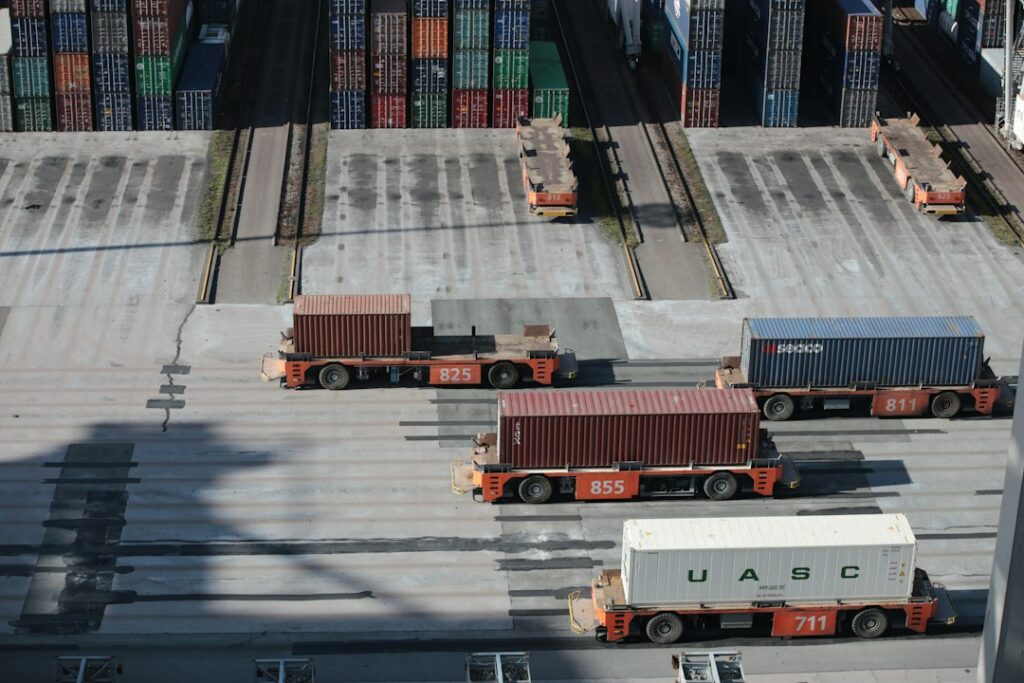
Automated guided vehicles (AGVs), pick‑to‑light systems, and robotic arms reduce manual labor and improve accuracy. Even a modest investment—like a pick‑by‑voice solution—can boost productivity by 25%.
Action step: Conduct a cost‑benefit analysis for a pick‑by‑voice system, factoring labor savings, error reduction, and ROI timeline.
—
5. Perfecting the Last‑Mile Delivery Experience
5.1 Offer Flexible Delivery Options
Customers now expect same‑day, curbside, and locker pickups. Integrate a delivery management platform (e.g., Bringg, Onfleet) that lets shoppers choose their preferred method at checkout.
Action step: Launch a “click‑and‑collect” pilot at a regional hub, track adoption rates, and aim for at least 15% of orders to shift to in‑store pickup within three months.
5.2 Use Route Optimization Algorithms
Last‑mile routes are notoriously inefficient. Software that applies vehicle routing problem (VRP) algorithms can cut mileage by up to 30%, saving fuel and time.
Action step: Feed today’s delivery list into a route optimizer, compare total miles before and after, and set a target reduction of 10% for the next month.
5.3 Communicate Proactively
Proactive notifications—SMS alerts, email updates, and real‑time map links—reduce “Where’s my package?” calls by up to 40%.
Action step: Implement an automated notification workflow for all shipments, measure call‑center volume, and iterate until a measurable drop is observed.
—
Conclusion – Key Takeaways for Logistics Leaders
1. Map, diversify, and buffer – A transparent, multi‑sourced supply chain with calibrated safety stock is the foundation of resilience.
2. Strategic transportation – Blend modes, consolidate freight, and leverage real‑time tracking to cut costs and enhance service.
3. Warehouse efficiency – Optimize slotting, automate replenishment, and explore cross‑docking to accelerate order flow.
4. Tech adoption – AI forecasting, blockchain traceability, and robotics are no longer “nice‑to‑have” but essential for competitive edge.
5. Last‑mile excellence – Flexible delivery options, smart routing, and proactive communication turn the final step into a loyalty builder.
By treating logistics as a strategic growth engine rather than a back‑office function, you unlock higher margins, happier customers, and a supply chain that can thrive amid any market turbulence. Start with one actionable step from each section, measure the impact, and iterate—your logistics transformation begins today.
—
Ready to revamp your logistics game? Share your biggest challenge in the comments, and let’s tackle it together!